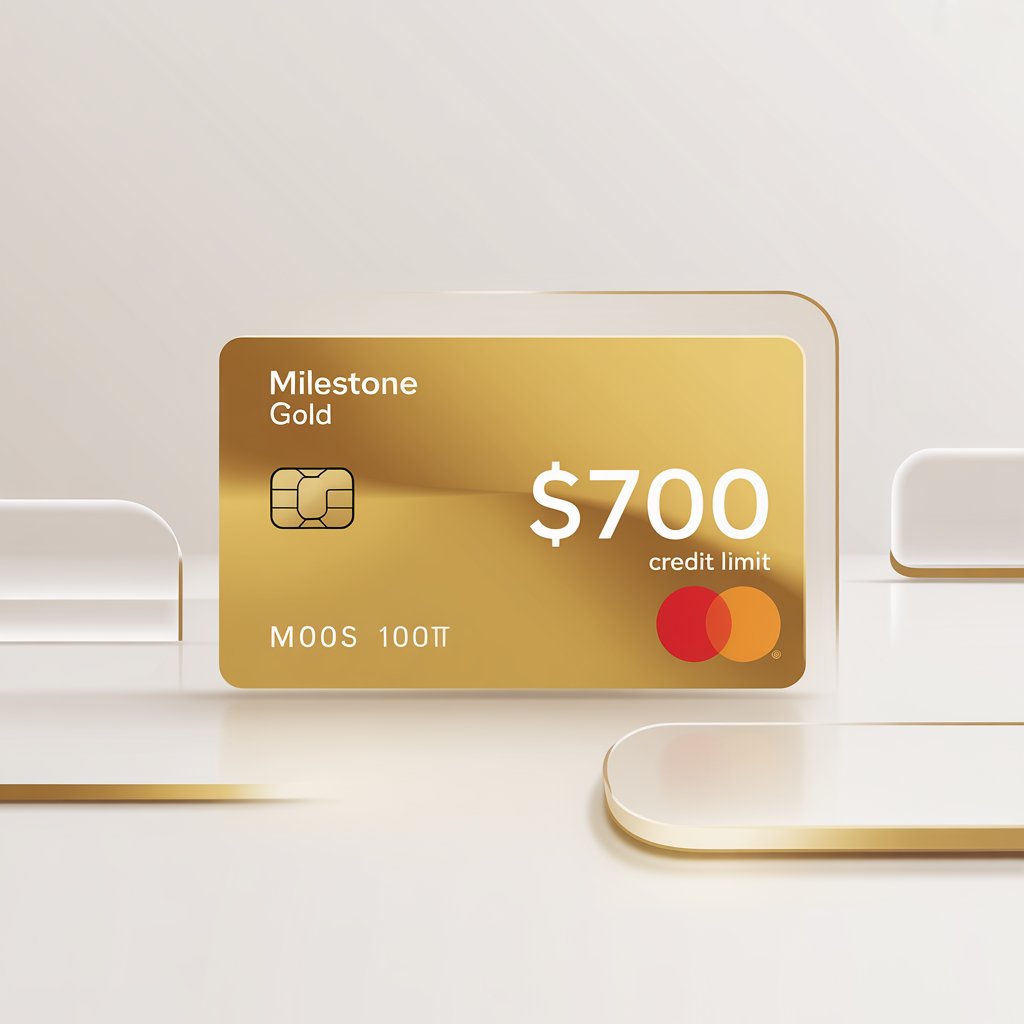
Tired of bad credit holding you back and traditional banks saying no at every turn? The Milestone credit card offers a no-deposit unsecured option that many people in your situation turn to when they need credit access right now.
Thank you for reading this post, don’t forget to subscribe!As a financial advisor who has helped countless individuals rebuild after setbacks like late payments, collections, or thin credit files, I see the Milestone credit card come up often in discussions about credit cards for bad credit. It promises a guaranteed $700 credit limit if approved, reports to all three major credit bureaus, and provides a practical way to improve credit score quickly through responsible use.
However, the steep fees and high APR mean it’s not a casual choice. This complete 2026 guide breaks down everything honestly — from exact costs and approval tips to real-world pros, cons, and smarter alternatives — so you can make a confident decision.
The Milestone credit card is an unsecured Mastercard aimed at people with bad or fair credit who need unsecured credit card approval without a security deposit. It targets those working to rebuild credit fast. The main benefit is keeping your savings untouched while gaining immediate access to a credit line. The primary drawback is the high annual and monthly fees plus a 35.9% APR that makes carrying a balance extremely costly.
Milestone Credit Card Quick Facts
| Feature | Details |
|---|---|
| Card Type | Unsecured Mastercard for bad credit |
| Credit Limit | Guaranteed $700 if approved (higher possible based on income and credit) |
| APR | 35.9% variable (purchases and cash advances) |
| Annual Fee | $175 first year; $49 thereafter |
| Monthly Fee | $0 first year; $12.50 after |
| Credit Score Required | Bad to fair (typically under 580–669) |
| Best For | Unsecured credit card approval without deposit + rebuilding credit fast |
What Is the Milestone Credit Card?
The Milestone credit card (Milestone Gold Mastercard) is issued by The Bank of Missouri and serviced by Concora Credit. It is specifically designed for individuals with challenging credit histories who struggle to qualify for prime or near-prime cards.
Unlike secured credit cards for bad credit that require you to pledge your own money as collateral, this card provides true unsecured credit card approval. If approved, you receive a starting credit line — often the full $700 — that you can use anywhere Mastercard is accepted, without tying up your savings.
The card reports payment activity monthly to Equifax, Experian, and TransUnion. This triple-bureau reporting is a key reason it helps many users improve credit score quickly, as on-time payments strengthen the payment history factor (35% of your FICO score).
It offers standard features like 24/7 online account access, mobile app support, and zero liability for unauthorized transactions. There are no rewards programs or low introductory APRs — its value lies in accessibility for subprime credit cards USA and those needing a practical starting point.
Milestone Credit Card Key Features and Benefits
The Milestone credit card delivers several targeted advantages for its audience:
- No security deposit required — Your money stays available for emergencies or daily needs.
- Guaranteed $700 credit limit if approved — Provides meaningful spending power immediately for many applicants.
- Reports to all three credit bureaus — Supports efforts to rebuild credit fast with consistent positive history.
- Soft-pull pre-qualification — Check eligibility without impacting your credit score.
- 24/7 mobile-friendly account management — Easily monitor balances, set autopay, and track usage.
- Fraud protection — Standard zero-liability coverage if your card is lost or stolen.
Real-life example: Lisa, a single mom with a 548 score after medical debt, got approved for $700. She used the card only for budgeted groceries and gas she could repay from her next paycheck. By keeping utilization low and paying on time for eight months, her score jumped 65 points, helping her qualify for a better auto loan rate later. Experiences like hers show how disciplined use of the Milestone credit card can create real momentum.
Milestone Credit Card Credit Score Requirements
The Milestone credit card is tailored for credit cards with low credit score. Most approvals go to applicants with bad credit (typically FICO scores below 580), though some with fair scores up to around 669 may qualify depending on other factors.
Beyond your score, lenders consider recent payment patterns, income stability, current debt load, and absence of very recent severe negatives like bankruptcy.
You can pre-qualify with a soft inquiry that does not affect your score. A hard inquiry only happens if you complete the full application and receive approval — a standard part of the process for any credit card.
Actionable tip: Strong, verifiable monthly income and a bank account in good standing can improve your chances even if your score sits in the low 500s.
Milestone Credit Card Fees and Charges
Costs are one of the most important factors with the Milestone credit card, as they run higher than many alternatives.
- Annual fee: $175 in the first year, then $49 in following years.
- Monthly fee: $0 in year one; $12.50 per month starting year two (adding about $150 annually).
- Purchase APR: 35.9% variable — very high, making balances expensive to carry.
- Late payment fee: Up to $41.
- Returned payment fee: Up to $41.
- Over-limit fee: Up to $41 (only if you opt in to overlimit coverage).
- Foreign transaction fee: 1%.
- Cash advance fee: Usually 5% with a minimum.
Note that the first-year annual fee is typically deducted from your available credit, so a $700 limit may start closer to $525 in usable funds until paid. After year one, total ongoing fees approach $199 per year.
To minimize costs, pay your full balance every month and avoid cash advances. Carrying even a modest balance at 35.9% APR can quickly reduce the card’s value.
Milestone Credit Card vs Other Credit Cards for Bad Credit
Understanding how the Milestone credit card compares helps you choose the best fit. Here’s a clear breakdown focused on credit cards for bad credit.
Comparison Table
| Feature | Milestone Credit Card (Unsecured) | OpenSky Secured Visa | Indigo Credit Card (Unsecured) | Typical Secured Card |
|---|---|---|---|---|
| Deposit Required | None | $200 minimum | None | $200–$500 |
| Starting Credit Limit | $700 if approved | Equals your deposit | $700+ if approved | Equals your deposit |
| Annual Fee | $175 yr1; $49 after | $35 | $175 yr1; $49 after | $0–$35 |
| Monthly Fee | $12.50 after yr1 | None | Similar to Milestone | Usually none |
| APR | 35.9% variable | ~23–25% variable | 35.9% | 20–29% |
| Credit Check | Soft pre-qualify | None | Soft pre-qualify | Soft or none |
| Best For | No cash for deposit | Lowest long-term costs | Another no-deposit option | Getting deposit back later |
Key differences explained:
- Versus secured cards like OpenSky: Secured options require an upfront deposit but feature significantly lower fees and often allow graduation to unsecured status. OpenSky stands out for its modest $35 annual fee and high approval rates even without a credit check.
- Versus Indigo credit card: The two are very similar in structure, target audience, high APR, and fees. Both provide unsecured credit card approval without a deposit. Review the specific pre-qualification offer you receive to decide.
If you can set aside even a small deposit, a secured card usually saves money over 12–24 months while still helping you build credit. If cash is extremely limited, the Milestone or Indigo offers faster access.
Milestone Credit Card Pros and Cons
Pros
- Genuine no-deposit unsecured credit card approval
- Solid $700 starting limit for approved users
- Reports to all three bureaus — effective for rebuilding credit fast
- Soft-pull pre-qualification with no score impact
- Wide acceptance as a Mastercard
Cons
- High first-year fee plus ongoing monthly charges after year one
- Expensive 35.9% APR if you carry any balance
- No rewards, cash back, or introductory offers
- Some users note slower customer service response times on payment issues
How to Apply for the Milestone Credit Card Step-by-Step
- Pre-qualify online — Enter basic details for a soft credit pull (no score impact).
- Complete the full application — Provide SSN, income, and expense information accurately.
- Review the offer — See your approved limit and terms if successful.
- Accept and receive the card — It typically arrives in 7–10 business days.
- Activate and set up autopay — Secure on-time payments from day one.
Keep income verification documents handy in case requested.
Milestone Credit Card Approval Odds and Tips
While not truly “guaranteed,” approval odds are decent for people with bad credit and stable income. Key positive factors include verifiable monthly earnings, a functional checking account, and no very recent major credit events.
Practical tips to boost your chances:
- Apply when your employment and income look steady on paper.
- Pay down small debts if possible 30–60 days before applying.
- Review your free credit reports and fix any errors beforehand.
- Answer every question honestly — discrepancies can lead to denial.
Many applicants with scores in the 500s still succeed when their overall financial picture supports the fees and limit.
Is the Milestone Credit Card Legit or a Scam?
The Milestone credit card is a legitimate unsecured card issued by an FDIC-insured bank. It complies with federal regulations and serves the subprime credit cards USA segment honestly.
Some complaints involve payment posting delays or customer service wait times — common frustrations with higher-risk issuers — but these do not indicate a scam. Always make payments through official channels and maintain your own records.
Is Milestone Credit Card Worth It in 2026?
The Milestone credit card can be worth it if you have no funds for a deposit, need immediate unsecured access, and commit to paying the balance in full every month. The credit-building potential through consistent reporting is real and can help you improve credit score quickly.
It is usually not worth it if you can afford a modest deposit for a lower-cost secured card, if there’s any chance you might carry a balance, or if better options appear in your pre-qualification results.
Who Should Avoid the Milestone Credit Card?
Avoid the card if you:
- Risk carrying even a small balance due to the high APR.
- Can qualify for cards with lower fees and better terms.
- Lack reliable income to cover the annual and monthly fees comfortably.
When the Milestone Credit Card Makes Sense
It works best as a short-term bridge (ideally 12–24 months) for rebuilding after credit challenges. Use it only for small, planned purchases you can repay immediately, maintain utilization below 30%, and focus on perfect payment history.
Who Should Use the Milestone Credit Card?
The best users are adults with bad credit who need unsecured credit card approval without a deposit and are disciplined enough to treat the card responsibly while working to improve credit score quickly. It suits those focused on steady progress who plan to upgrade once their score rises.
Expert Verdict on the Milestone Credit Card
Having guided many clients through credit cards for bad credit and subprime credit cards USA options over the years, I view the Milestone credit card as a functional but costly tool. It reliably delivers no-deposit access and strong bureau reporting that can accelerate positive credit history when used correctly.
The $700 limit gives you usable headroom when other doors are closed. However, the high fees — especially the first-year hit and ongoing monthly charges — plus the punishing 35.9% APR require strict discipline. Pay in full, keep balances tiny, and use autopay to maximize benefits and minimize costs.
In my experience, this card shines as a temporary stepping stone. Run the numbers against your budget first. If the fees fit and you stay committed, it can help you rebuild and move on to better cards. Otherwise, consider secured alternatives that cost less over time while delivering similar credit-building results. The ultimate goal is sustainable progress toward stronger financial options.
FAQs About the Milestone Credit Card
How quickly can the Milestone credit card help improve my credit score? With on-time payments and utilization kept under 30%, many users notice gains of 40–80 points within 3–6 months, thanks to the weight of payment history in scoring models.
Does applying for the Milestone credit card hurt my credit score? Pre-qualification uses a soft pull and has no impact. A hard inquiry occurs only if you submit the full application and get approved.
What are the real ongoing costs after the first year on the Milestone credit card? After year one, expect a $49 annual fee plus $12.50 monthly fee, totaling approximately $199 per year. Always confirm your exact terms.
Can I request a credit limit increase on the Milestone credit card? Limit increases are possible after responsible use, but not guaranteed. Strong payment history and low balances strengthen your position.
Is the Milestone credit card better than a secured card? It is better only if you have absolutely no money for a deposit. Secured cards generally have lower fees, still report positively, and may convert to unsecured later.
How does the Milestone credit card compare to the Indigo credit card? Both offer similar no-deposit structures, $700+ limits, and high fees/APR. Choose based on the best pre-qualification offer and terms you receive.
What happens if I miss a payment on the Milestone credit card? You’ll incur late fees up to $41, possible negative reporting to the bureaus, and setbacks in your credit-building progress. Setting up autopay helps prevent this.
Can the Milestone credit card help after bankruptcy or collections? Yes, many people use it successfully after such events, provided other approval factors like income are solid. Responsible use can help rebuild positive history over time.
The Milestone credit card provides accessible unsecured credit card approval and a pathway to improve credit score quickly for those who cannot use a secured card. Its no-deposit model is a clear advantage, but the high fees and APR demand careful budgeting and strict payment discipline.
Who should use it? People with bad credit, steady income, and a solid plan to pay in full every month while rebuilding. Who should skip it? Anyone who might carry a balance or who can afford a lower-cost secured option.
Take time to compare your pre-qualification offers and run the numbers against your monthly budget. Whatever choice you make, focus on consistent, responsible credit habits — they are what truly open better financial doors down the road. Make the decision that supports your long-term progress.