
Introduction
Pocket door innovation has revolutionized interior design, offering a seamless way to maximize space without sacrificing style. If you’re tired of bulky swinging doors eating up precious square footage in your hallway, bathroom, or closet, a pocket door might be your next big upgrade. In this ultimate guide, we’ll dive deep into everything you need to know—from the basics of what a pocket door is and its unbeatable benefits to a hands-on pocket door installation tutorial, common pitfalls like pocket door problems, and creative pocket door ideas that blend modern minimalism with cozy farmhouse vibes. Whether you’re a DIY enthusiast tackling pocket door replacement or a homeowner eyeing a double pocket door for that grand entrance, we’ve got practical tips, step-by-step lists, and expert insights to help you decide if this concealed sliding door solution is right for your space. Let’s slide into the details!
Thank you for reading this post, don’t forget to subscribe!What Is a Pocket Door?
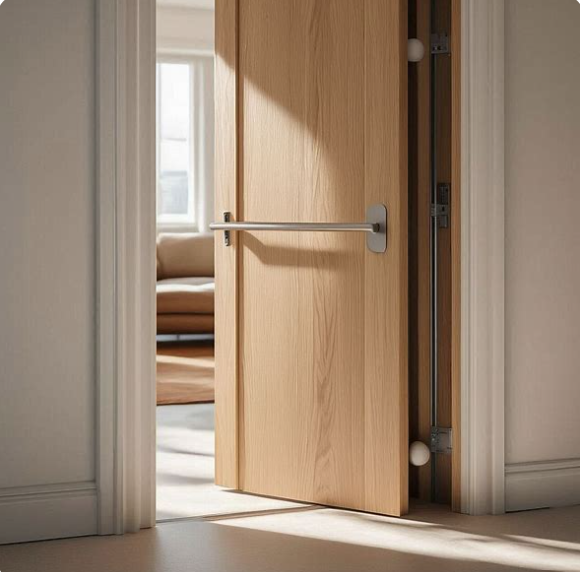
At its core, a pocket door is a sliding interior door that disappears into a recessed “pocket” in the wall when opened, creating an invisible barrier that frees up floor space. Unlike traditional hinged doors that swing outward or inward, this sliding pocket door glides smoothly along a hidden track system, making it ideal for tight quarters like powder rooms or laundry nooks.
The magic happens thanks to a cleverly engineered pocket door frame, which is built into the wall during construction or renovation. This frame houses the door when it’s not in use, supported by durable pocket door hardware including rollers, tracks, and guides. For those unfamiliar, think of it as a concealed sliding door that prioritizes function and aesthetics—perfect for modern homes where every inch counts.
Pocket doors have been around since the 19th century, but today’s versions boast upgraded materials like solid wood or frosted glass for that contemporary edge. They’re especially popular as interior pocket doors, enhancing flow in open-concept layouts without visual clutter.
The Benefits of Pocket Doors
Why choose a pocket door over standard options? The pocket door benefits are numerous, starting with unmatched space efficiency. In a world of shrinking urban apartments, these doors eliminate the swing radius, allowing you to place furniture right up against the wall. Imagine a cozy reading chair in your hallway—no more dodging a protruding door!
Aesthetic appeal is another huge win. A well-installed pocket door creates a clean, minimalist look, blending seamlessly with your pocket door wall for a custom-built feel. They’re versatile too: opt for a frosted glass panel to let light filter through while maintaining privacy, or go bold with a barn-style wood finish for farmhouse charm.
Safety shines here as well. Without protruding hardware, pocket doors reduce bump risks, making them family-friendly. Plus, they’re quieter than creaky hinges, thanks to soft-close pocket door rollers that glide silently. Environmentally, many models use sustainable woods, aligning with eco-conscious renos.
Let’s break down the top pocket door benefits in a quick table:
| Benefit | Description | Best For |
|---|---|---|
| Space Savings | No swing space needed; door hides in wall. | Small bathrooms, closets |
| Modern Aesthetics | Flush, frameless design for sleek interiors. | Open-plan homes |
| Enhanced Privacy | Full coverage when closed; light-permeable options available. | Bedrooms, offices |
| Quiet Operation | Soft-close hardware minimizes noise. | Family homes |
| Versatility | Customizable materials like glass or wood. | Farmhouse to contemporary |
These perks make pocket doors a smart investment, often boosting home value by 2-5% in resale markets.
Pocket Door vs Sliding Door: Key Differences
Confused about pocket door vs sliding door? You’re not alone—these terms get tossed around interchangeably, but they serve distinct purposes. A sliding door typically runs along the exterior of the wall on visible tracks, like those patio barn doors that add rustic flair. In contrast, a pocket door tucks away inside the wall, offering total concealment.
The biggest differentiator? Installation complexity. Pocket doors demand a built-in cavity, ideal for new builds or major remodels, while sliding doors mount externally for quicker, cheaper setups. Cost-wise, expect $500-1,500 for pocket door hardware and frame versus $200-800 for basic sliding tracks.
Functionally, pocket doors excel in privacy-heavy spots like en-suites, where the door vanishes completely. Sliding doors shine in semi-open areas, like kitchen pantries, where the visible track adds design interest. Durability favors pocket doors in high-traffic zones, as their enclosed track system shields from dust.
Here’s a side-by-side comparison:
| Feature | Pocket Door | Sliding Door |
|---|---|---|
| Installation | Requires wall cavity; more labor-intensive. | Surface-mounted; DIY-friendly. |
| Space Usage | Zero floor/wall obstruction when open. | Takes wall width when open. |
| Aesthetics | Invisible, seamless integration. | Visible tracks for industrial vibe. |
| Cost | Higher upfront ($800+). | Budget-friendly ($300+). |
| Best Use | Tight interiors like bathrooms. | Larger openings like closets. |
Ultimately, choose based on your layout: pocket for stealth, sliding for statement.
Essential Pocket Door Hardware and Components
No pocket door thrives without top-notch hardware. The pocket door track system is the backbone—a heavy-duty metal rail mounted at the top of the frame, guiding the door’s path. Pair it with high-quality pocket door rollers, adjustable steel wheels that ensure smooth, whisper-quiet operation for doors up to 200 lbs.
Don’t overlook the pocket door guide, a subtle bottom-mounted piece that prevents swinging and keeps alignment perfect. For concealed sliding door fans, look for jamb-integrated guides that hide flush. The pocket door jamb, or casing, finishes the edges with primed wood or MDF for a polished look.
Kits simplify sourcing: a basic pocket door kit includes frame, track, rollers, and pulls for $300-600. Upgrades like soft-close mechanisms add luxury. Pro tip: Match hardware to door weight—light rollers for hollow-core interiors, heavy-duty for solid oak.
Bullet-point essentials:
- Track System: Aluminum or steel, 2-3x door width.
- Rollers: Adjustable height (1.5-2 inches) for easy tweaks.
- Guides: Floor or jamb-mounted to curb derailments.
- Jamb Kit: Pre-cut for 2×4 walls, ready for paint.
- Pulls/Handles: Recessed for flush access.
Investing in reliable components cuts down on future poc ket door repair headaches.
Pocket Door Installation: Step-by-Step Guide
Ready for poc ket door installation? This DIY-friendly project takes 4-6 hours for pros, longer for novices. Start with a poc ket door kit sized to your opening—measure twice, as precision is key.
Tools needed: Level, drill, saw, shims, and safety gear.
Step-by-step poc ket door installation:
- Prep the Rough Opening: Frame a cavity twice the door width plus 1 inch (e.g., 73 inches for a 36-inch door). Height: door height + 1.5 inches. Ensure king studs support the header.
- Install the Frame: Slide the poc ket door frame into the cavity. Shim for plumb, secure with nails every 16 inches. Attach the track to the header with screws.
- Hang the Door: Lift the door onto rollers, aligning with the track. Adjust height via roller screws until it clears the floor by 1/2 inch.
- Add Guides and Jamb: Mount the poc ket door guide at the strike side. Install jambs around the opening, caulk gaps.
- Test and Finish: Slide the door 10-20 times for smoothness. Add pulls, paint, and trim.
Common newbie tip: Use a laser level for track alignment to avoid binding. For double poc ket door setups, mirror the process on both sides with a shared header.
If retrofitting, pocket door replacement in existing walls requires drywall cuts—budget for pro help if unsure.
Common Pocket Door Problems and Repairs
Even the best setups face poc ket door problems. Warping from humidity is top culprit, causing rubs or sticking—solution: Replace with moisture-resistant composites during poc ket door replacement.
Derailment? Check poc ket door rollers for wear; swap every 5-10 years. Noisy operation signals loose tracks—tighten screws and lubricate with silicone spray.
For poc ket door repair on frames, sagging jambs need shimming. If the entire unit fails, a full poc ket door kit swap runs $400-800.
Quick fixes table:
| Problem | Cause | Repair |
|---|---|---|
| Sticking Door | Misaligned track or swollen wood. | Shim frame; sand edges. |
| Noisy Rollers | Dry bearings or debris. | Clean/lube; replace if cracked. |
| Door Won’t Stay Closed | Faulty latch or guide. | Install magnetic catch; realign guide. |
| Wall Vibration | Weak header support. | Add blocking; reinforce studs. |
Early detection via annual checks keeps your sliding poc ket door gliding for decades.
Choosing the Right Pocket Door Dimensions
Poc ket door dimensions dictate fit and flow. Standard widths: 24, 28, 30, 32, or 36 inches; height fixed at 80 inches for most interiors. Depth? 1-3/8 inches for slabs, fitting 4-9/16-inch walls.
For double poc ket doors, double the width (e.g., 72 inches total) for wider entries like master suites. Custom sizes add 20-30% cost but allow tailoring to odd spaces.
Factor room scale: 30-inch for baths, 36-inch for closets. Always add 2x width for the pocket depth. Pro hack: Mock up with cardboard to visualize.
Pocket Door Ideas and Design Inspirations
Ignite your creativity with these 10 poc ket door ideas. From modern to farmhouse, there’s magic in every slide.
- Frosted Glass Glam: A concealed sliding door with etched patterns diffuses light in a home office—perfect for urban lofts.
- Rustic Reclaimed Wood: Barn-style panels in a farmhouse kitchen pantry add warmth without bulk.
- Minimalist White Flush: Seamless interior poc ket door in a Scandi bedroom for airy vibes.
- Bold Black Frame: Accent a powder room with matte black hardware for industrial edge.
- Mirrored Magic: Full-length mirrors on closet doors amplify small spaces visually.
- Textured Weave: Woven rattan inserts for boho bathrooms—lightweight and breathable.
- Double Door Drama: Symmetrical walnut panels flanking a dining room for elegant divides.
- Vintage Paneled: Shaker-style in a mudroom, painted sage green for coastal charm.
- Smart Tech Integration: Embed sensors for hands-free operation in accessible homes.
- Eco Bamboo Bliss: Sustainable slats in a laundry room, blending green design with function.
These poc ket door ideas prove versatility—mix with LED strips for nighttime glow or hinges for hybrid swings.
Double Pocket Doors for Larger Openings
Elevate entries with a double poc ket door, where two panels meet in the center and recess oppositely. Ideal for 48-72-inch spans, they demand deeper walls (6-8 inches) but deliver grand flow.
Benefits? Twice the drama, zero obstruction. Hardware mirrors singles but includes synchronizers for even pulls. Installation mirrors basics, just scale up the frame kit.
Design tip: French-style glass for light-filled living rooms or solid oak for formal libraries.
FAQs
What makes a pocket door different from a regular sliding door? A poc ket door slides into a hidden wall cavity for total concealment, while a regular sliding door tracks along the surface. If space is ultra-tight, go pocket—it’s a game-changer for interior layouts.
How much does pocket door installation cost for a DIYer? Expect $300-700 for a poc ket door kit and tools, plus your time. Pro poc ket door installation runs $800-1,500, including frame and drywall tweaks. Budget extra for custom dimensions.
Can I fix pocket door problems like a stuck roller myself? Absolutely! For poc ket door repair, pop off the door, clean the rollers with WD-40, and readjust height. If it’s the track system, shim for level—most issues stem from settling walls.
What are standard pocket door dimensions for a bathroom? Most interior poc ket doors measure 28-32 inches wide by 80 inches tall, fitting snugly in 2×4 walls. For double poc ket doors, aim for 60 inches total to handle towel stacks without cramping.
Are there easy pocket door ideas for small farmhouse kitchens? Try a sliding poc ket door with shiplap panels—rustic yet space-smart. Add recessed pulls for that concealed sliding door vibe, opening to a butler’s pantry without stealing counter real estate.
How do I choose pocket door hardware for heavy doors? Opt for steel poc ket door rollers rated 150+ lbs and a robust track system. Include a bottom guide to prevent sagging—brands like Johnson Hardware shine for durability.
Is pocket door replacement worth it in an older home? Yes, if swing doors crowd your flow. A new poc ket door frame and jamb kit modernizes without full demo, saving 20-30% on reno costs while boosting resale appeal.
Conclusion
From space-saving wonders to stylish statements, the poc ket door stands out as a timeless upgrade that blends practicality with panache. We’ve covered the essentials: its sleek design, undeniable benefits, head-to-head with sliding doors, foolproof installation steps, must-have hardware like rollers and tracks, troubleshooting common problems, dimension dos, and 10 inspiring ideas to spark your next project. Whether outfitting a cozy interior poc ket door or a dramatic double setup, this concealed gem transforms ordinary walls into fluid gateways.
Ready to slide into a more efficient home? Measure your space, grab a poc ket door kit, and start planning. Your dream layout awaits— what’s your first poc ket door idea? Share in the comments or consult a local pro today!



2 responses to “Pocket Door Magic: 10 Ideas, Pros & Install Guide”
[…] personally tested over 300 digital tools, online tools, and software tools this year. Below are the 47 absolute best — ranked, compared, […]
[…] you’re a homeowner revamping furniture or an industry professional seeking efficient solutions, understanding uvlack can elevate your […]